
Medical devices and laboratory
A surgical instrument is sterilized again after every use, while its identifier has to stay with it for the whole of its service life. So the mark is not carried by ink but by the surface itself: the laser transforms the material, and the mark is still there after autoclaving. In the lab the difficulty comes from the other side — there the sample label has to keep sticking in the freezer, and stay readable after the surface has been wiped with alcohol.
Device marking that survives the autoclave
Surgical and medical instruments are marked with a laser: the beam transforms the surface of the metal instead of adding a layer to it. The part number, the serial number and the UDI code therefore stay through the sterilization cycles — there is nothing to rub off or soak away. The difficulty comes from the part itself: it is small, often cylindrical, and the code has to fit into a field a few millimeters across and still be read by a scanner.
Sample identification in the lab
A sample gets its identifier when it arrives, and that identifier follows it through preparation and the analyzer all the way to the report. When a sample is split across several tubes, each tube gets its own label carrying the same reference. On a tube the label goes around the barrel, without wrinkles, because the scanner reads off a curved surface; on a rack it goes onto the flat side wall, where the label is not rolled on but pressed on. The same print & apply unit does both — with a different applicator head.
Labels for deep-frozen samples
A good share of the samples go into a freezer and stay there, often for a long time. The label then has to do two things: the adhesive has to hold in the cold, and the print has to stay readable through condensation and thawing. The choice is not decided by the printer but by the trio of face material, adhesive and ribbon — and by whether the label goes onto a room-temperature surface or onto one that is already cold.
What takes a wipe-down, and what takes sterilization
A wipe-down and a sterilization cycle are not the same load, and the answer to them is not the same either. An alcohol wipe — ethanol, isopropyl alcohol — calls for a print that resists rubbing and solvents: a resin ribbon and a synthetic face material, since on a paper label the print blurs after a few wipes. Steam sterilization asks for more: there the label meets saturated steam at 250 °F (121 °C), and plasticized vinyl does not come through that — PET and polyimide do. And where the instrument goes through both the washer-disinfector and the autoclave, the identifier is no longer held by a label but by the lasered surface.
Extracting the fume from laser marking
Laser marking produces fume and fine particles, even when the marked area is only a few square centimeters. In a lab that has to be extracted at source: a pre-filter, a HEPA filter and an activated-carbon stage take the dust and the gases, and the cleaned air goes back into the room, with no ducting to the outside. The gain is twofold: the operator does not breathe the fume, and the laser optics stay clean, so the contrast of the mark does not quietly deteriorate.
Applicable regulations
In many cases the content and form of the marking is set by law — worth clarifying at the start of the project.
- FDA UDI (21 CFR Part 801, Subpart B)
- Device labels and packages carry a unique device identifier in plain text and in an automatic identification and data capture (AIDC) form such as a barcode. A device intended for more than one use and reprocessed between uses must also bear a permanent UDI marking on the device itself (21 CFR 801.45).
- UDI (Unique Device Identification)
- The unique device identifier has two parts — the device identifier, which names the model, and the production identifier, which carries data such as the lot or serial number and the expiration date.
Recommended machines
Not a complete list, but what suits the most common tasks in this industry.
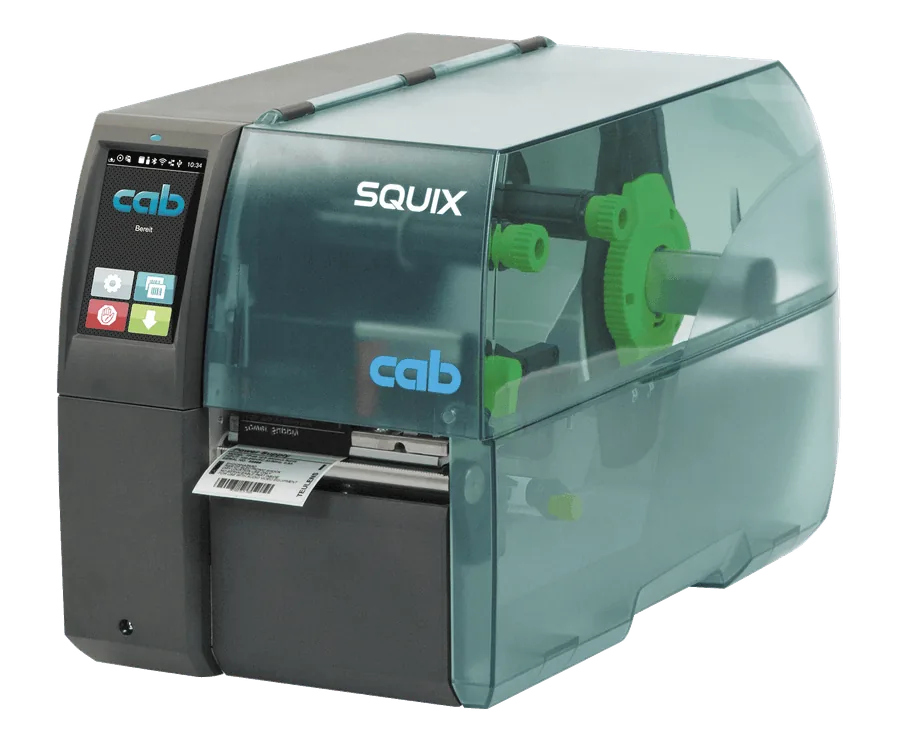
At 600 dpi the code and the readable text still fit on a small sample label without the characters running together.
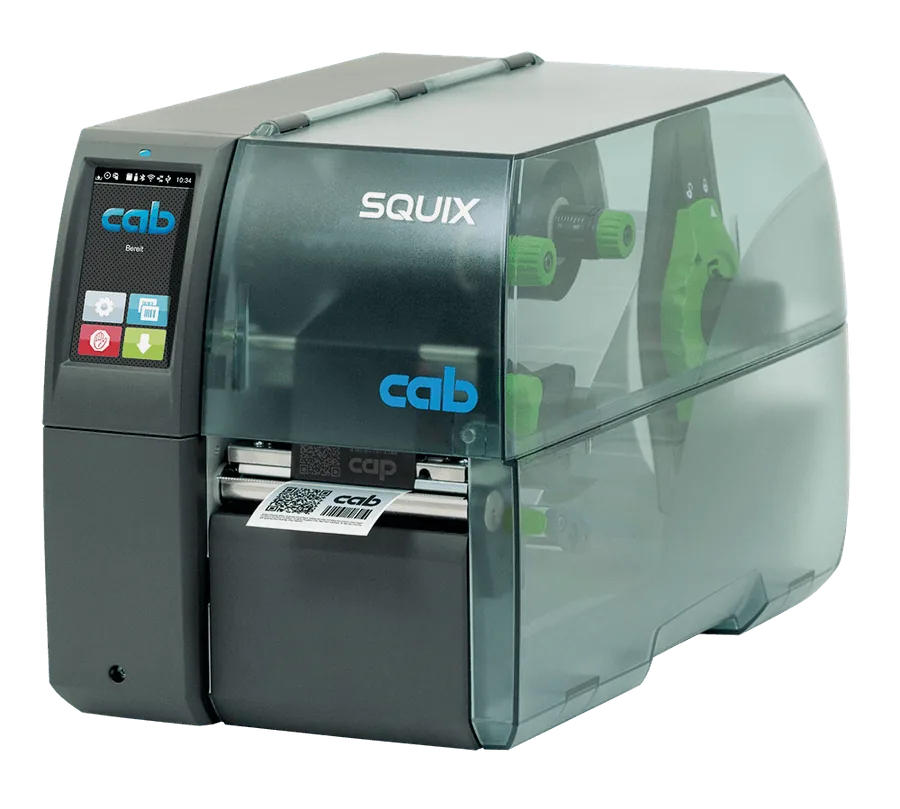
Built for narrow tube labels and continuous materials, with center-aligned media guidance — no re-adjustment when the material changes. With the AXON 2 tube applicator it also applies the label to tubes and vials inserted horizontally, in a cycle of less than two seconds.
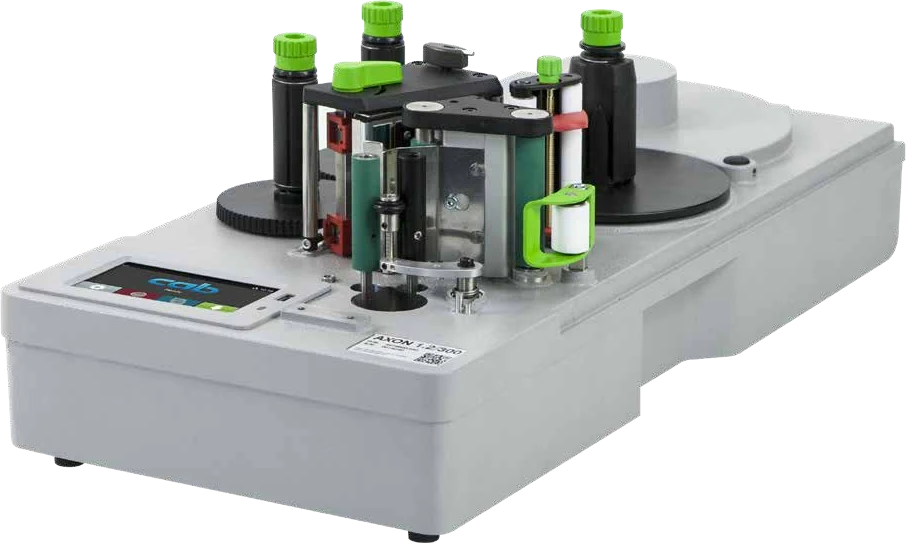
A benchtop tube labeler made for the unique identification of laboratory samples: it prints and labels a vertically inserted tube in under two seconds, can verify the code with an optional camera, and connects to a LIMS.
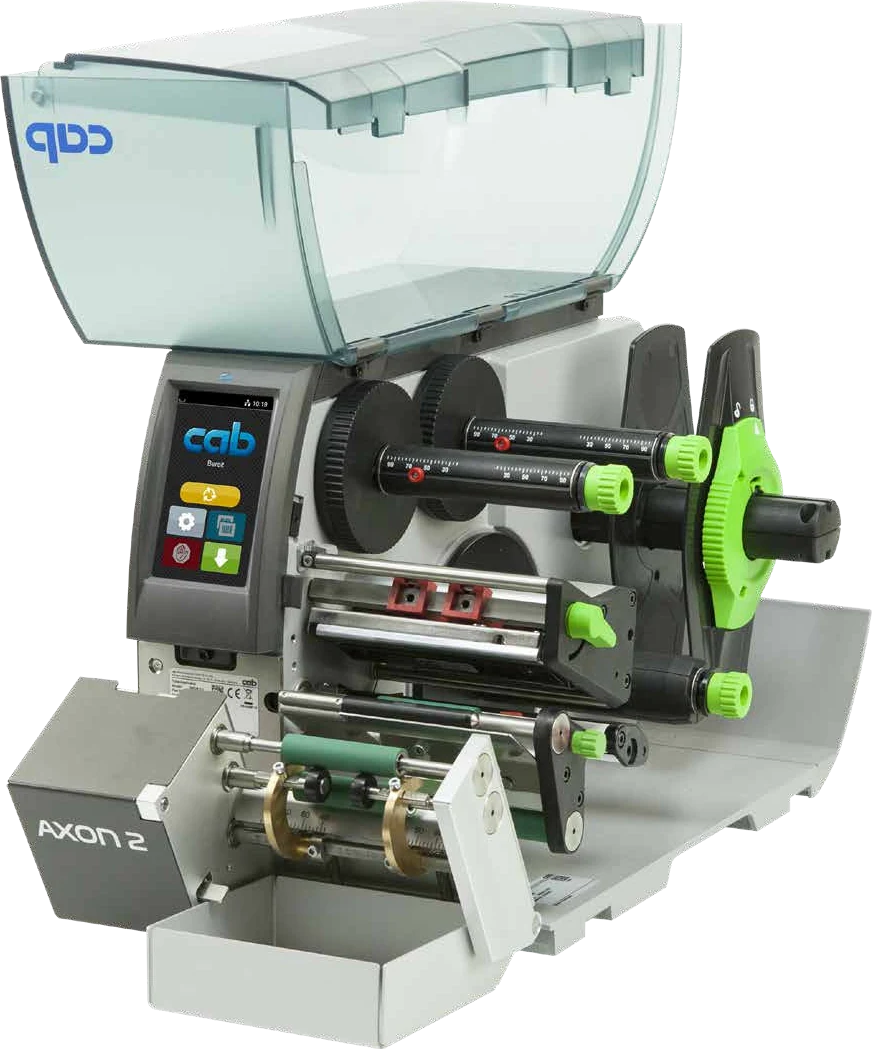
A tube applicator for sample tubes, mounted on the SQUIX 4 MP printer: it turns a horizontally inserted tube, capped or not, while labeling it, and collects the finished tubes in a tray.
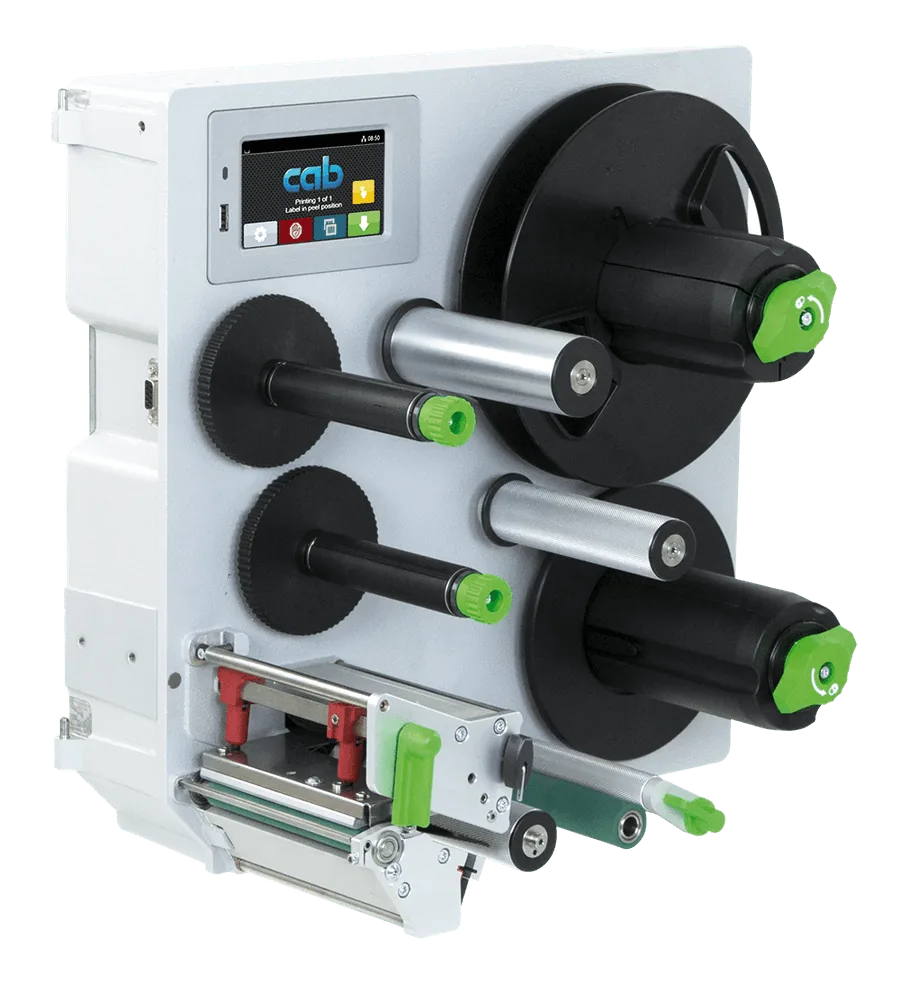
A print & apply unit: it prints the label and applies it as well. On the barrel of a tube a roll-on applicator rolls it into place; on the flat side of a rack a tamp-on head presses it on — the surface decides which one is needed.
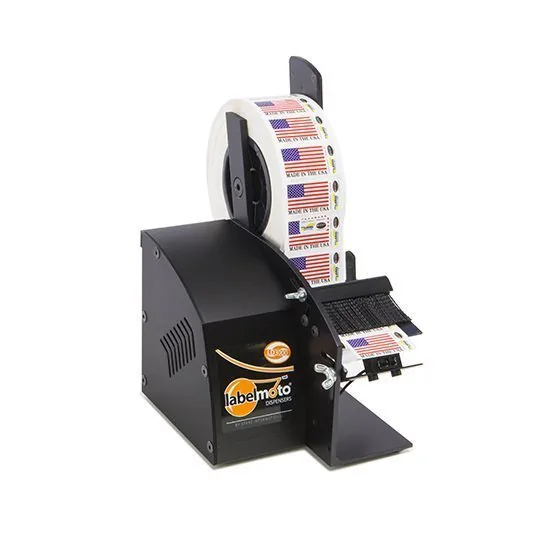
A dispenser for the lab bench: it peels small labels and presents them ready to pick, so they do not have to be worked off the liner with a gloved hand.
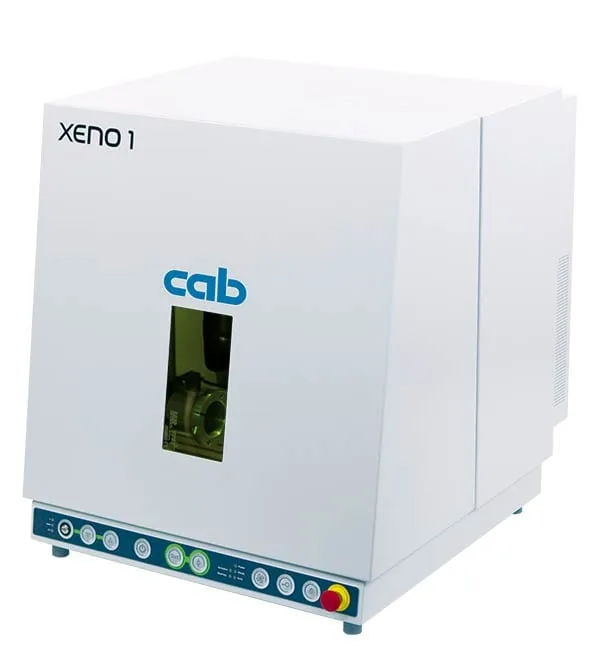
A closed Class 1 desktop system for marking instruments and small metal parts without setting up a separate laser room; a rotary axis can be added for cylindrical pieces.
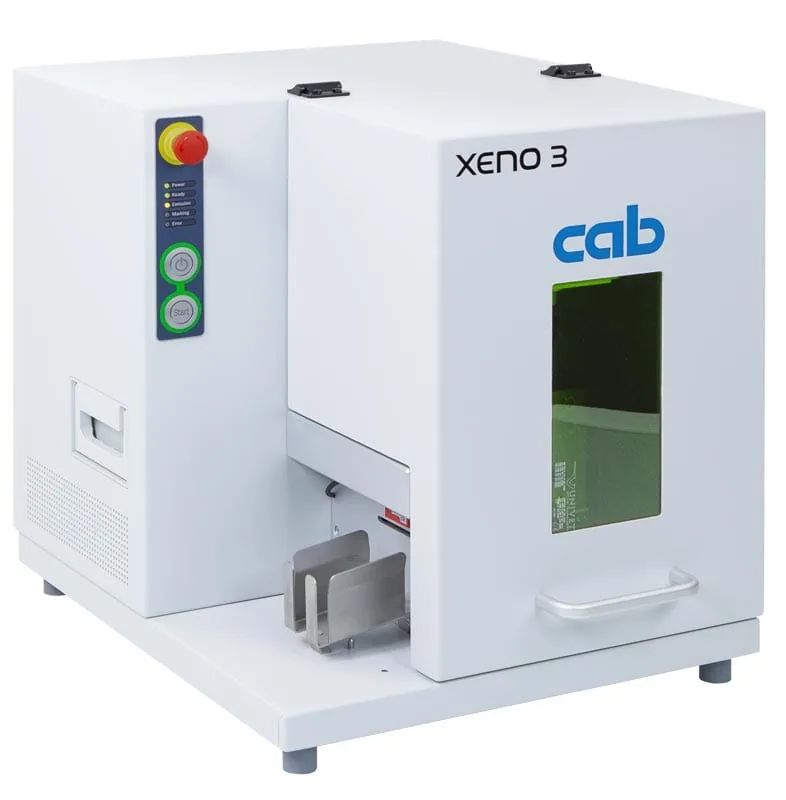
For marking nameplates and data plates in batches: the device identifier goes onto metal plates fed from a magazine, with no piece-by-piece positioning by hand.
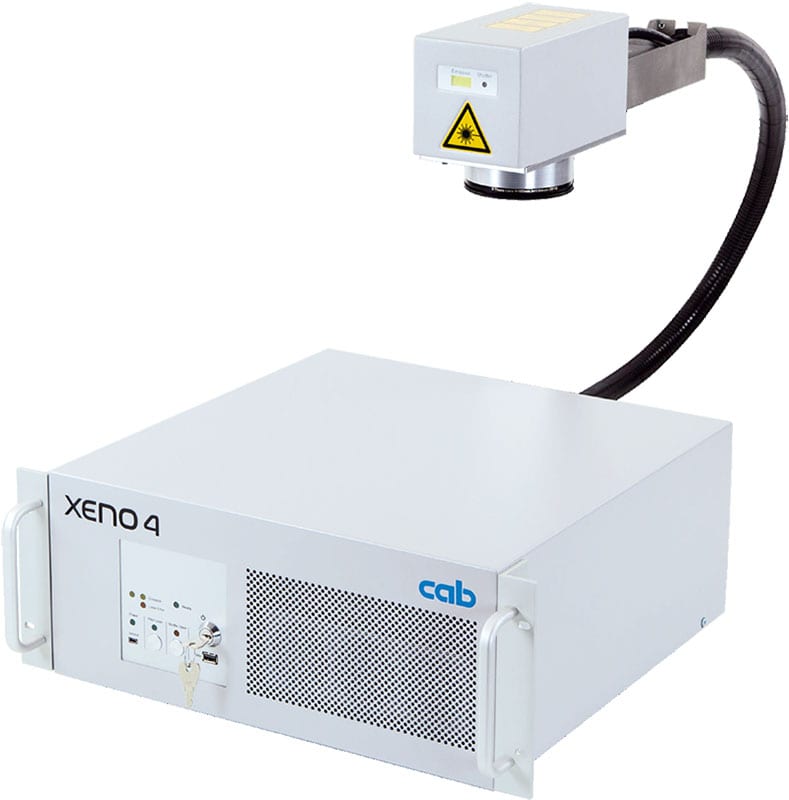
A fiber laser source with a separate scanner head that builds into an existing machine or cell — so metal instruments are marked in the flow of production, not at a separate workplace.
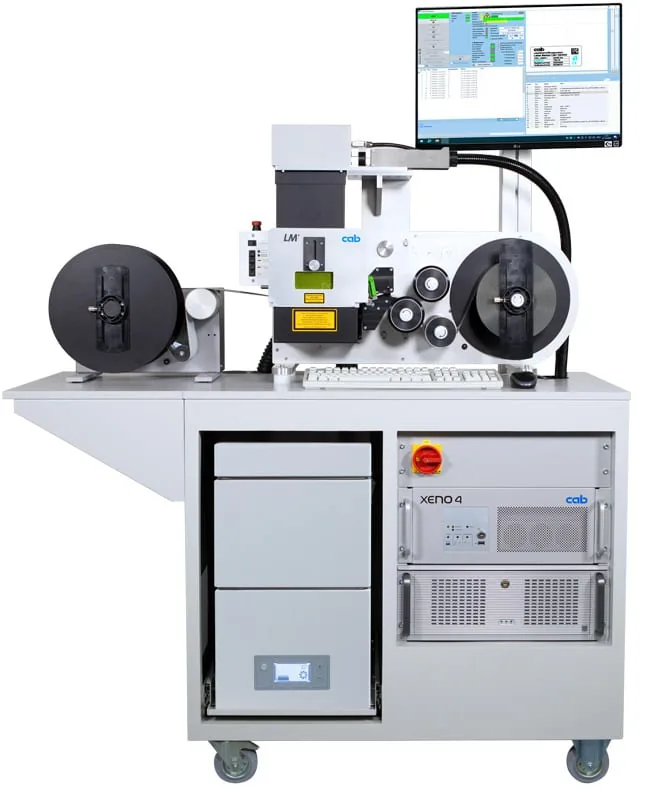
Marks and cuts equipment labels straight from the roll, with no die tool — which is what keeps label making quick for short runs and model changes.
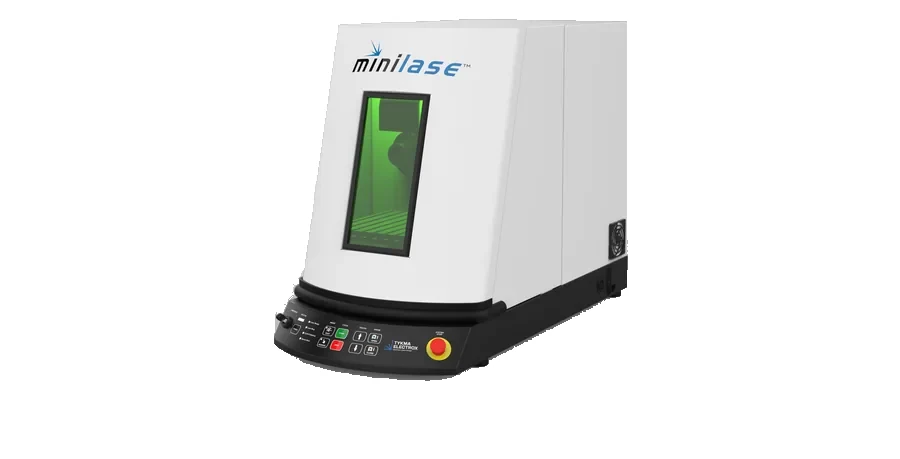
A benchtop Class 1 marker for higher volumes: the close-mark-open sequence runs automatically, so the operator only changes the part.
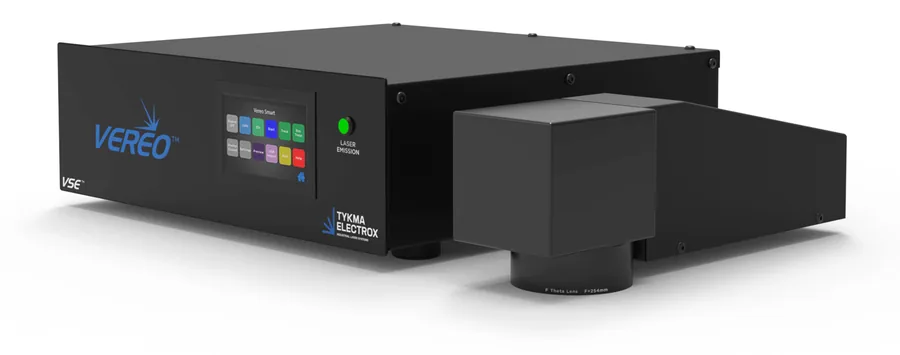
An integration laser that needs no PC: it stores the marking programs itself and connects straight to common PLCs when the marking sits in an automated cell.
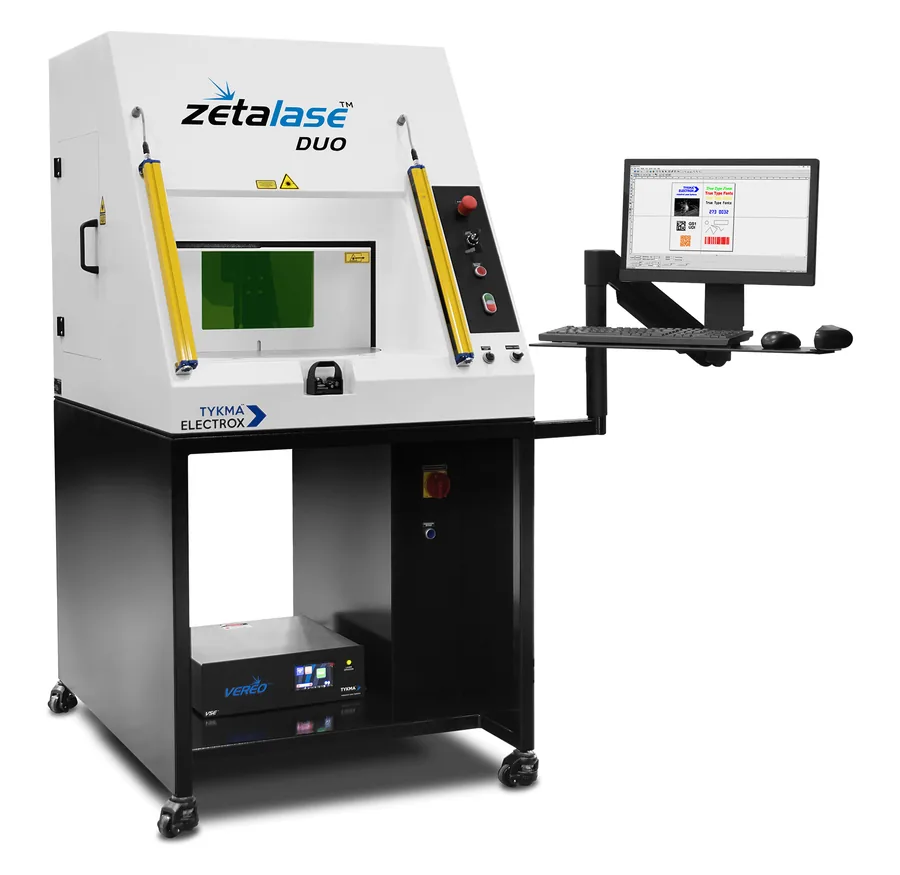
A dial-index, enclosed Class 1 workstation for high volumes: with dual rotaries it also marks 360° around the part, and its UV version is made for black annealing on medical devices.
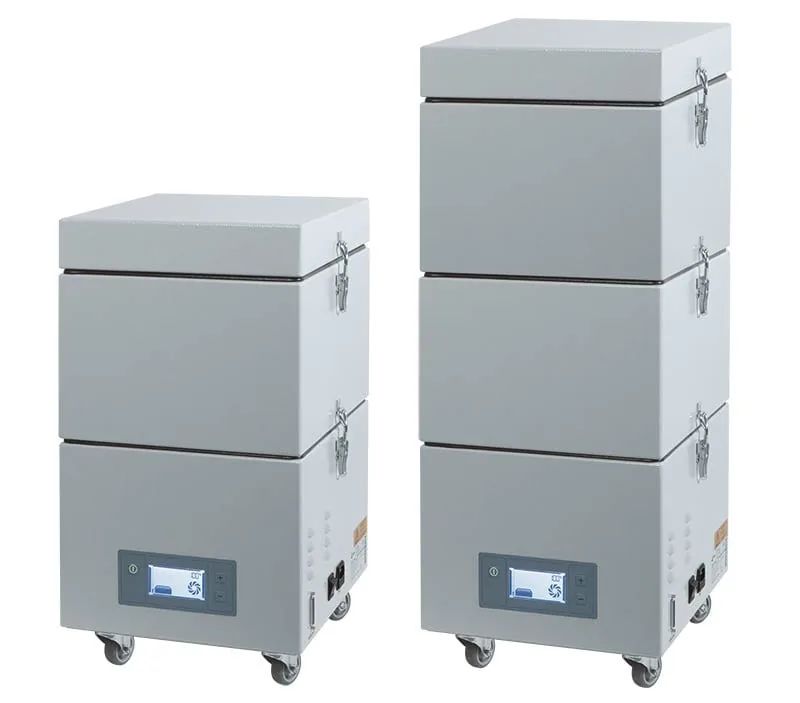
Extraction matched to the XENO marking lasers: an H13 filter takes the dust, activated carbon takes the gases, and the lens stays clean, so mark quality does not drift.

The resin ribbon family for prints that have to take alcohol wipe-downs and sterilization.
Related guides
Not finding your own task?
Tell us what needs marking, in what volume and under what conditions — and we will suggest a solution.
Contact us