
Machinery and electrical engineering
A machine carries its type plate, the cabinet carries terminal and wire markers, the housing carries warning text. These marks stay out there for the whole service life of the machine — in oil, in metal chips, in sunlight, under abrasion. The hard part is not producing the text but keeping it readable years later, at a service call, because that plate is what tells the technician which machine is in front of them.
Marking data plates and type plates
A type plate is made from stainless steel or anodized aluminum and carries the manufacturer’s details, the type designation, the serial number and the year of manufacture. A fiber laser writes the text into the metal itself, and on anodized surfaces it removes the top layer — so the contrast does not depend on a coat of ink that can be rubbed off. In a plate marking system the work comes from a magazine: plates of 1.6 × 0.79 to 4.7 × 3.9 in (40 × 20 to 120 × 100 mm), 20–39 mil (0.5–1 mm) thick, in stacks up to 2 in (50 mm) high, one after another.
Control cabinets, terminals and wires
A control cabinet holds hundreds of marks: terminal markers, device labels, wire identifiers, door text. For wire marking the carrier is narrow — flattened shrink tubing or a slim label — which calls for centered material guidance, otherwise the printer has to be reset every time the material changes. The marking gets creased and rubbed during wiring, then spends years in the warmth of the cabinet: it must neither wear off nor fade.
Marking large parts
A welded machine frame or a long profile does not fit into a benchtop marker, and often is not worth moving at all. Here the size of the working area decides: an open-frame system takes parts up to 20 in (508 mm) wide, while an enclosed marking station offers 38.6 × 18.1 × 38.6 in (980 × 460 × 980 mm), workpieces up to 110 lb (50 kg) and 17.3 in (440 mm) of Z travel. Open Class 4 operation, however, calls for a fenced laser area and key-controlled access — with an enclosed Class 1 station that falls away. And where the part is not worth moving, a handheld, mobile Class 1 marker goes to it instead.
Marking built into the line
A marker is not always a standalone machine. Built into a robot cell or a PLC-controlled line, it receives from the controller what to write on the next part — so the serial number is not typed in by hand but comes out of production control. Cycle time is then set by the line. A closed Class 1 enclosure pays off twice here: the station can stand right beside the line, and no laser area has to be fenced off around it.
Print that resists oil, UV and abrasion
A label inside a machine enclosure meets oil, coolant and metal chips; one on outdoor equipment meets sunlight. In both cases the pairing of face material and ribbon decides the outcome: a resin ribbon gives print that resists abrasion and chemicals, and a synthetic face material gives a carrier that does not disintegrate. With the wrong pairing the text is illegible before commissioning — even though it is made to be read years later.
Applicable regulations
In many cases the content and form of the marking is set by law — worth clarifying at the start of the project.
- NFPA 79
- The electrical standard for industrial machinery calls for a machine nameplate that is legibly and durably marked with, among other things, the supplier’s name and the serial number — the data a technician needs at a service call years later.
- ANSI Z535.4
- The US standard for product safety signs and labels: signal words (DANGER, WARNING, CAUTION), safety colors and symbols. The label is expected to stay legible for the expected life of the product.
- FDA 21 CFR 1040.10 / IEC 60825-1
- In the US, laser products are classified under the FDA performance standard for laser products, which also accepts classification to IEC 60825-1. A marking station built into a closed, light-tight enclosure is Class 1 from the outside: it can run beside the line without operator eyewear and without a fenced-off laser area.
Recommended machines
Not a complete list, but what suits the most common tasks in this industry.
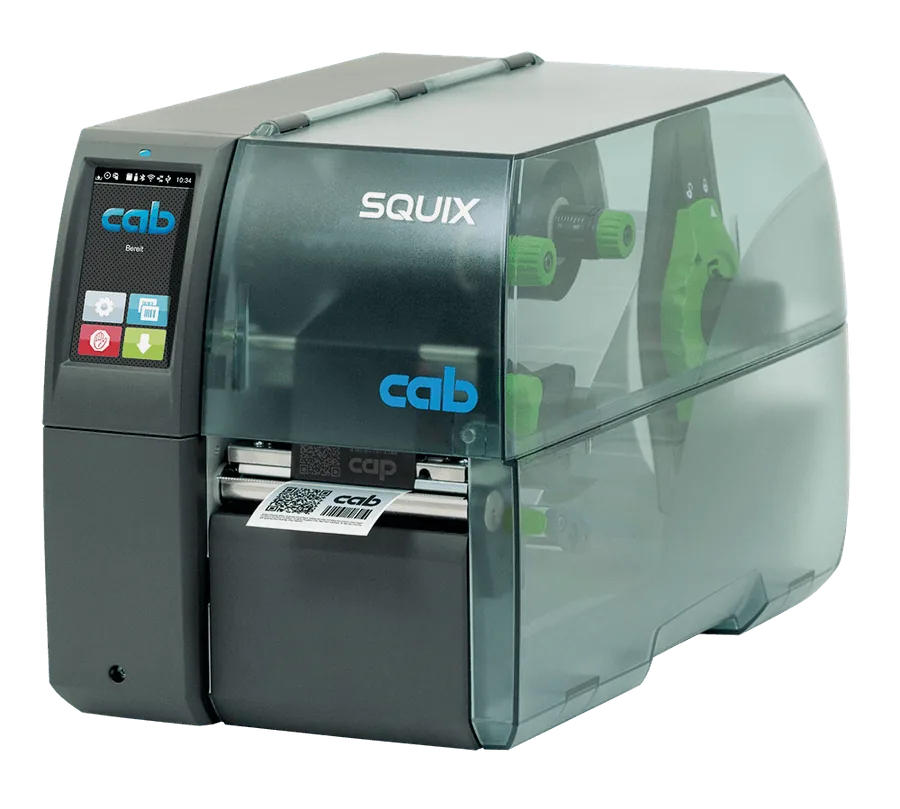
Centered material guidance for narrow wire markers and flattened shrink tubing — no re-setup when the material changes. With the WICON applicator it also wraps the self-laminating label around cables and wires of 0.08–0.63 in (2–16 mm).
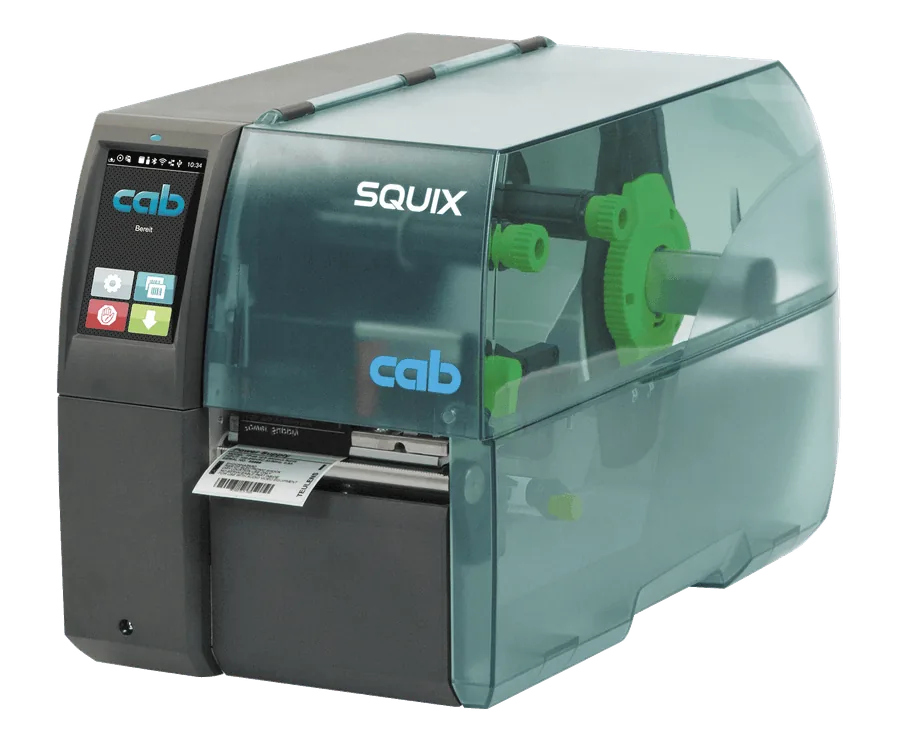
Continuous printing of machine plates, equipment labels and cabinet text up to 4.16 in (105.7 mm) wide, at 300 or 600 dpi.
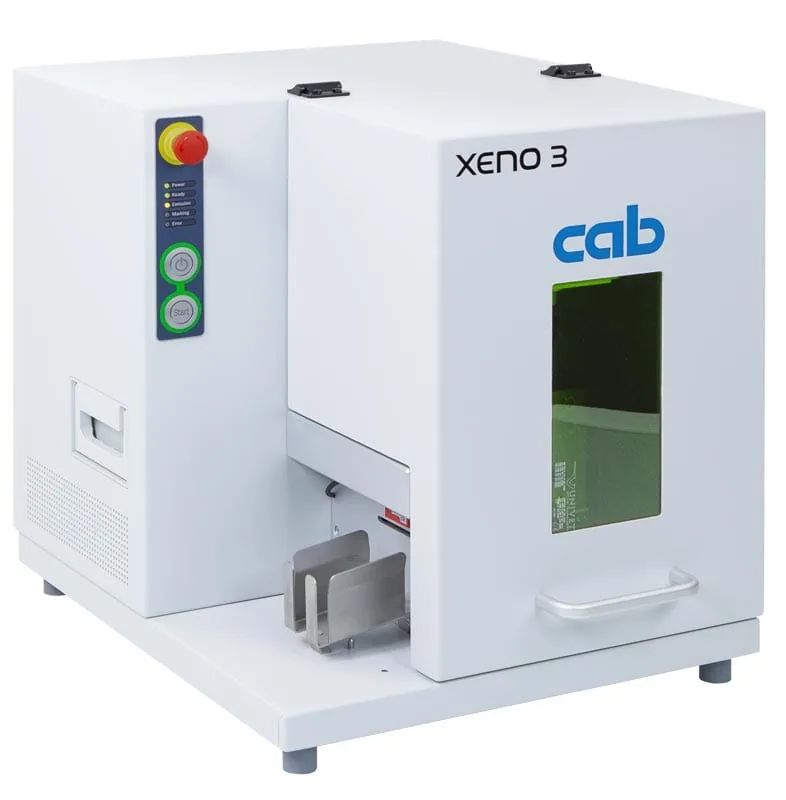
A plate marking system for type plates: it works through 1.6 × 0.79 to 4.7 × 3.9 in (40 × 20 to 120 × 100 mm) plates from an interchangeable magazine, in stacks.
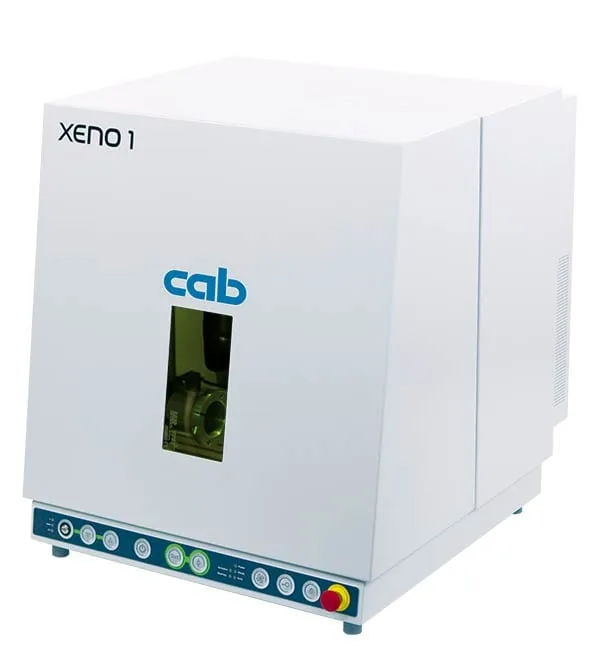
A compact enclosed marking station for parts and smaller plates, with a 4.41 × 4.41 or 7.09 × 7.09 in (112 × 112 or 180 × 180 mm) marking field and workpiece heights up to 8.27 in (210 mm).
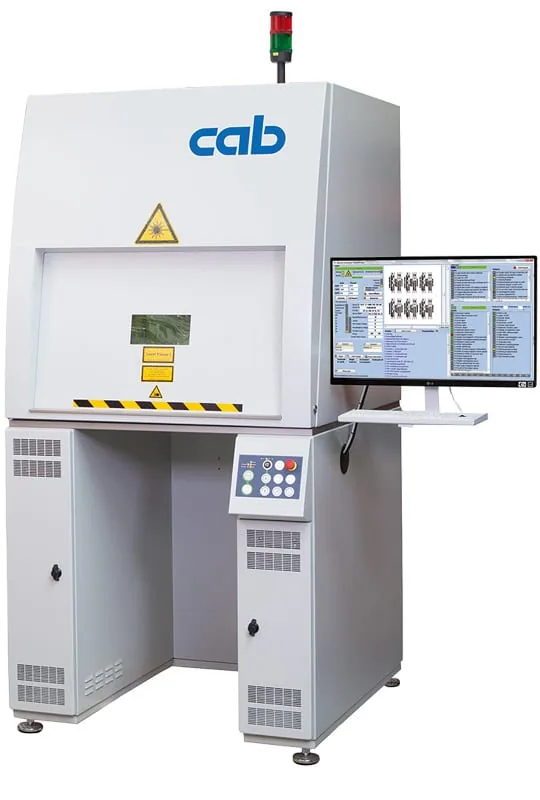
For series marking: a 38.6 × 18.1 × 38.6 in (980 × 460 × 980 mm) working area, workpieces up to 110 lb (50 kg), Class 1 — so it can stand beside the line without a laser area.
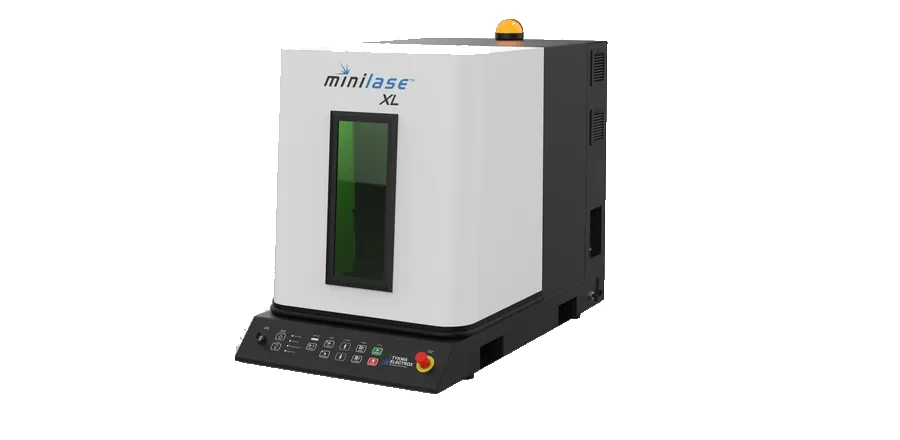
A benchtop machine with the largest part-loading area of the Minilase line and an open interior — parts up to 20 × 12.5 × 9.9 in (508 × 317 × 252 mm) with the standard lens; a service key allows open-door marking in Class 4.
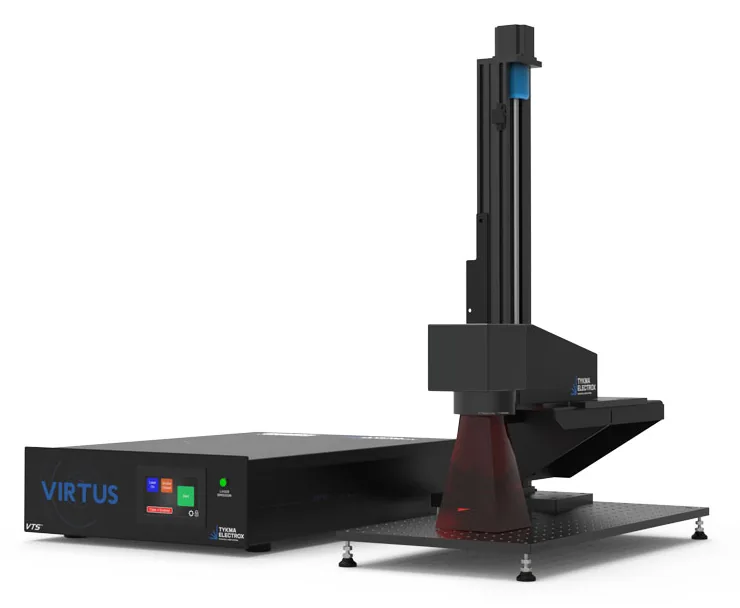
A MOPA fiber source for coated surfaces: the coating can be marked or ablated without having to cut into the material underneath.
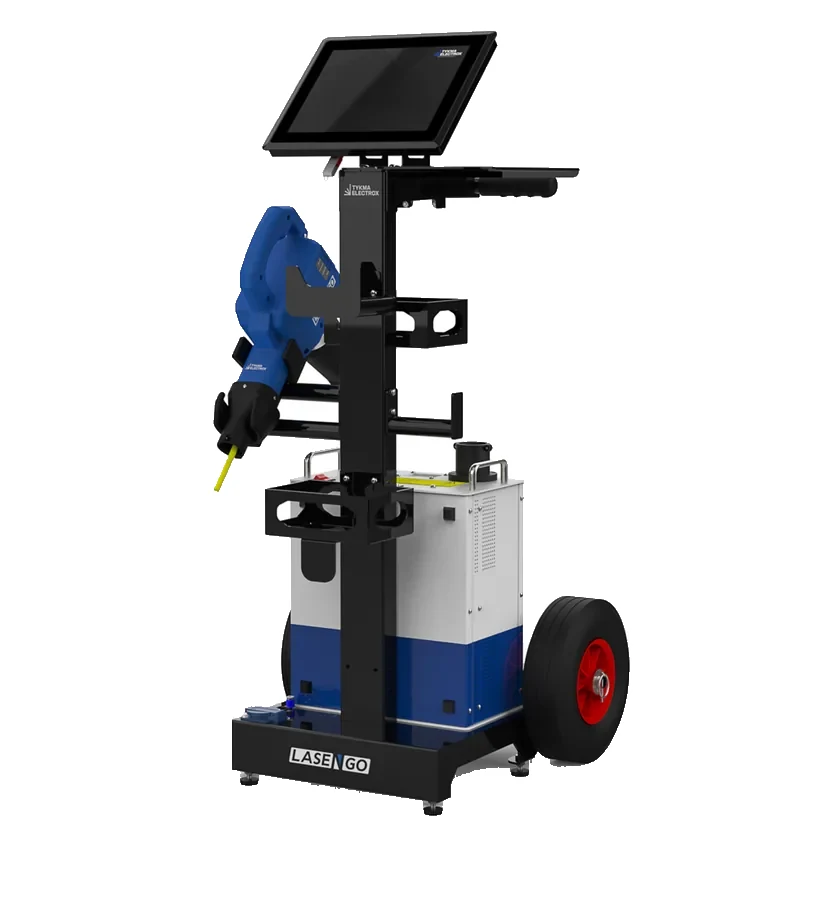
When a machine frame or a long profile will not fit into a marker, this cart-mounted, handheld Class 1 laser goes to the part instead — no limit on part size, with a 7.9 ft (2.4 m) umbilical.
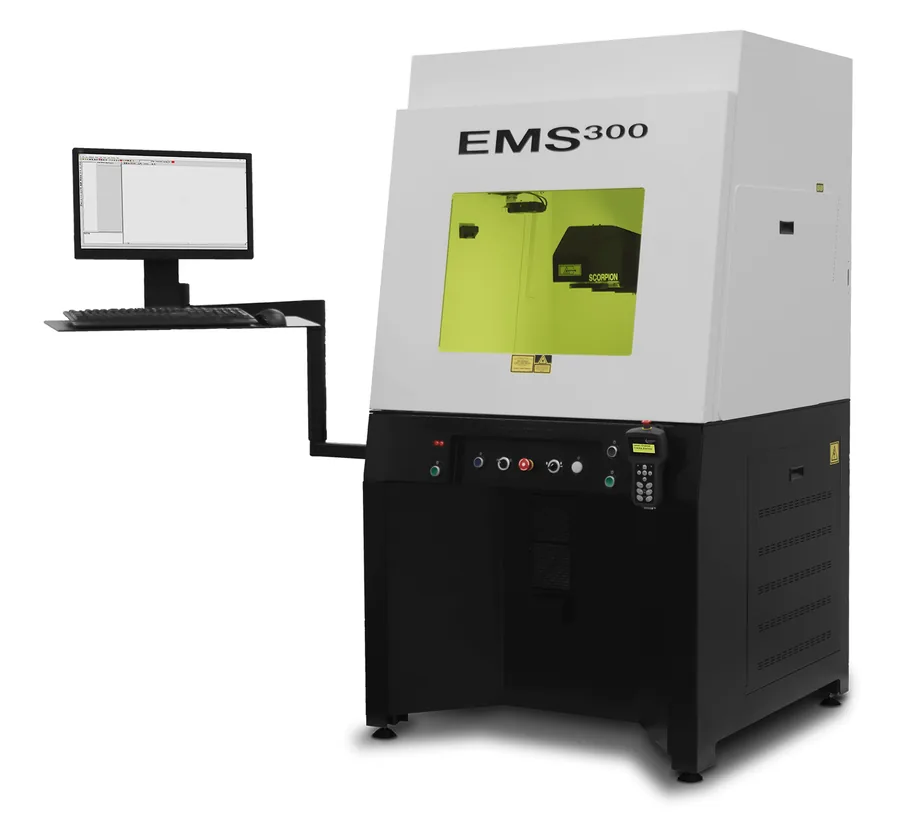
A heavy-duty workstation for large parts: workpieces up to 27.6 × 26.4 in (700 × 670 mm) and 110 lb (50 kg), with a programmable Z axis of 11.4 in (290 mm) travel (15.7 in [400 mm] optional).
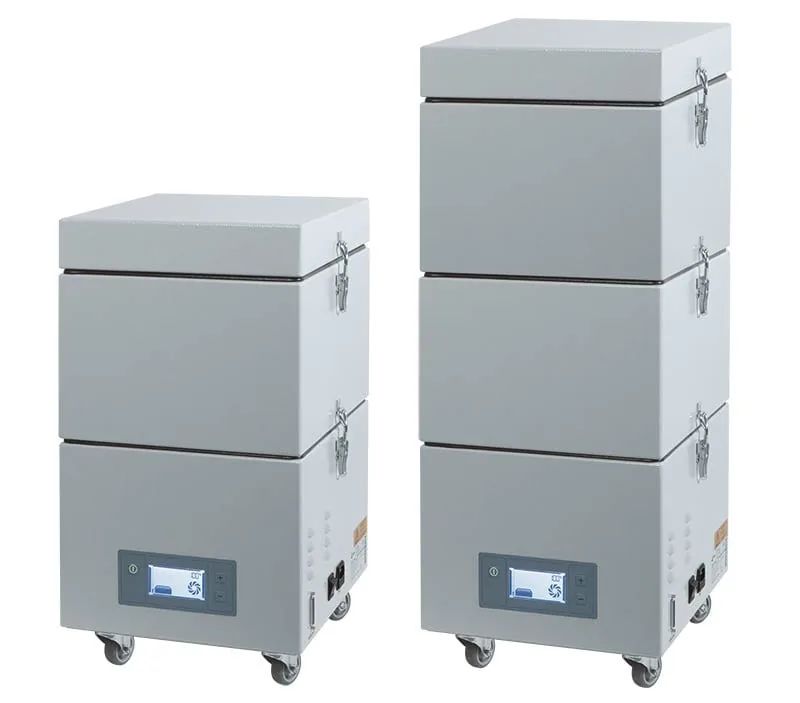
Extracts the fume from laser marking out of the marking area, keeping the lens clean so laser power does not drop off.

Resin ribbon for labels loaded with oil and abrasion — the print survives inside the machine.
Related guides
Not finding your own task?
Tell us what needs marking, in what volume and under what conditions — and we will suggest a solution.
Contact us