
Chemicals and hazardous substances
The label on a hazardous chemical looks the way the rules say it looks: a pictogram inside a red diamond border, a signal word, prescribed hazard and precautionary statements, and the supplier’s details. In the US, OSHA’s Hazard Communication Standard sets this out for shipped containers, aligned with GHS — and containers used inside the plant have to be labeled too. The other difficulty is the substance itself: whatever runs onto the label, the print has to survive it, or the first information to disappear is the reason the label was put there.
Printing the GHS label where the filling happens
A GHS label has a fixed structure: the pictogram inside a red diamond frame, the signal word, the hazard and precautionary statements, the product identifier and the supplier details. The red frame makes the label two-color, and a line with only a black printer has to buy pre-printed stock with the frame already on it and keep every size on the shelf. A two-color printer lays down the frame and the black text in one pass, so the finished GHS label comes off blank stock at the point of filling.
A print that survives the chemical
The label meets the same substance it identifies. If the product runs down the drum during filling, or the drum is washed off afterward, the print has to come through it. That calls for a resin ribbon and a synthetic label face to match: wax-based print smears on solvent contact. Chemical resistance always comes from the ribbon and the surface together, never from the ribbon alone — the same ribbon behaves differently on a different label material.
Labeling drums and canisters at the end of the filling line
A drum or a canister is cylindrical, and the label only lies flat if the application follows the curve of the surface — otherwise the edges lift and the pictogram breaks exactly where the label bends. At the end of the filling line a print & apply unit handles this: the label carries the filling data — batch number, date, quantity — and goes onto the container straight off the printhead, with nobody sticking it on by hand. The filler sets the pace and the labeling has to keep to it, because a full drum is not something anyone sends back for relabeling.
Approving and maintaining label templates
Label wording does not stand still: a substance gets reclassified, a hazard statement changes, a new export market adds a language to the label. If the template lives as a separate file at every site, one forgotten copy is enough to keep printing the old text. With central template management the label is approved in one place and every print station works from that approved version — so the marking is identical even when it comes out of three plants in five languages.
Applicable regulations
In many cases the content and form of the marking is set by law — worth clarifying at the start of the project.
- OSHA HazCom (29 CFR 1910.1200)
- OSHA’s Hazard Communication Standard brings GHS into US workplace law: labels on shipped containers must show the product identifier, the signal word, the hazard statements, the pictograms (a black symbol inside a red diamond border), the precautionary statements and the name, address and phone number of the responsible party. Workplace containers must be labeled as well.
- GHS
- The UN’s Globally Harmonized System sets a common basis for classifying chemicals and for what goes on the label: the pictogram, the signal word, and the hazard and precautionary statements.
- DOT hazardous materials (49 CFR Part 172)
- For transport, packages of hazardous materials also carry DOT hazard labels and markings — a separate set of requirements from the OSHA workplace label.
Recommended machines
Not a complete list, but what suits the most common tasks in this industry.

A two-color printer that lays the red frame of the GHS pictogram and the black text onto the label in one pass.
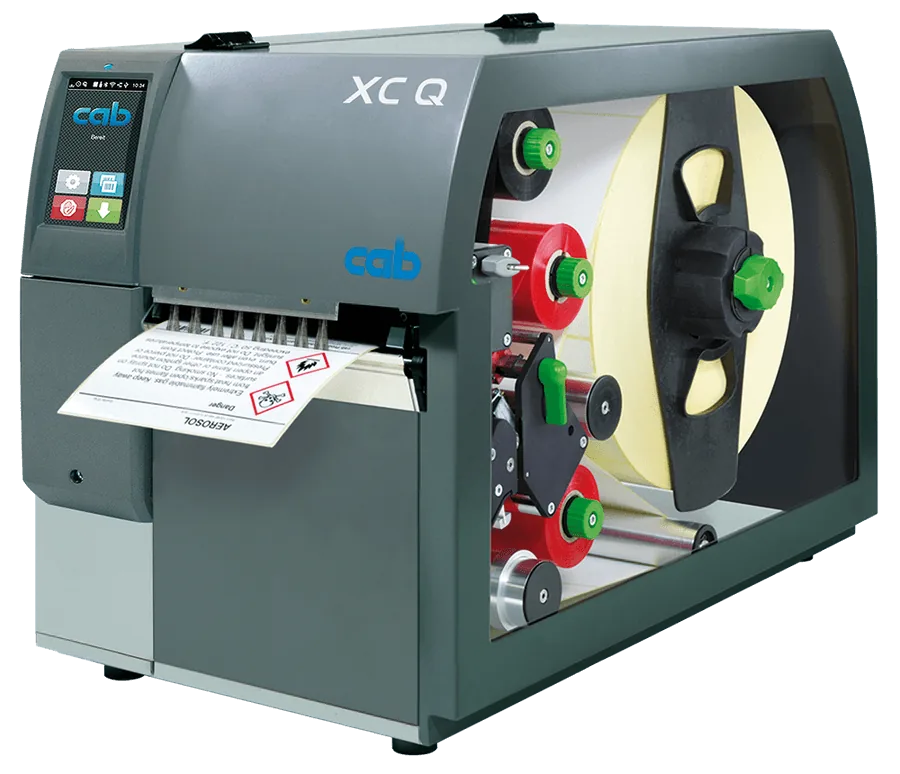
The same two-color printing on wider stock, so a full-size drum label is produced in a single print.
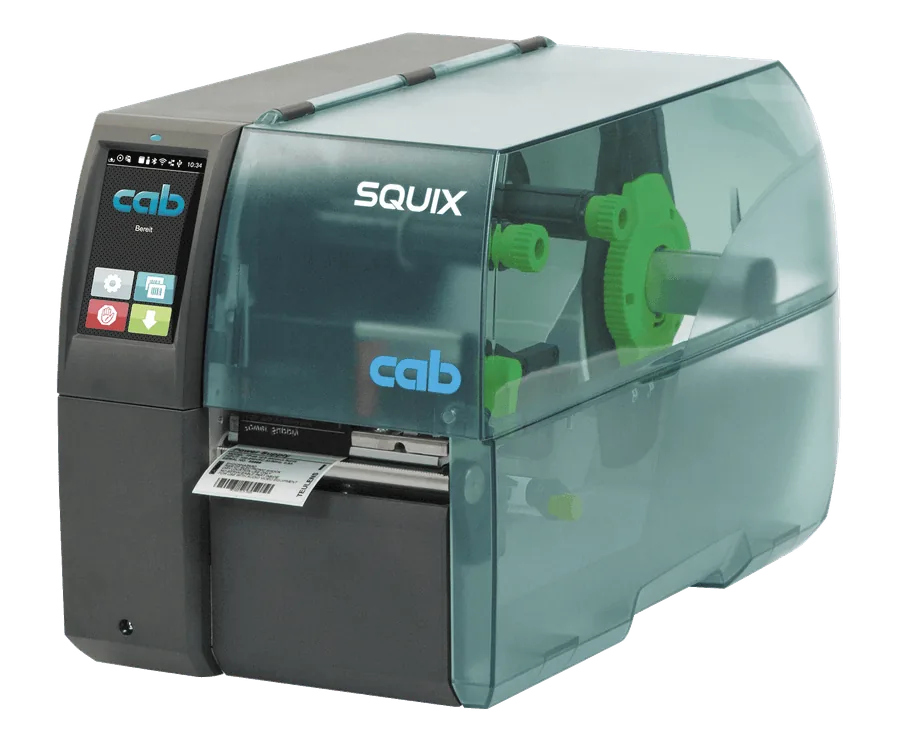
A single-color printer: it lays the black text onto pre-printed stock that already carries the red frame — at 600 dpi the long hazard and precautionary statements stay sharp in small type.
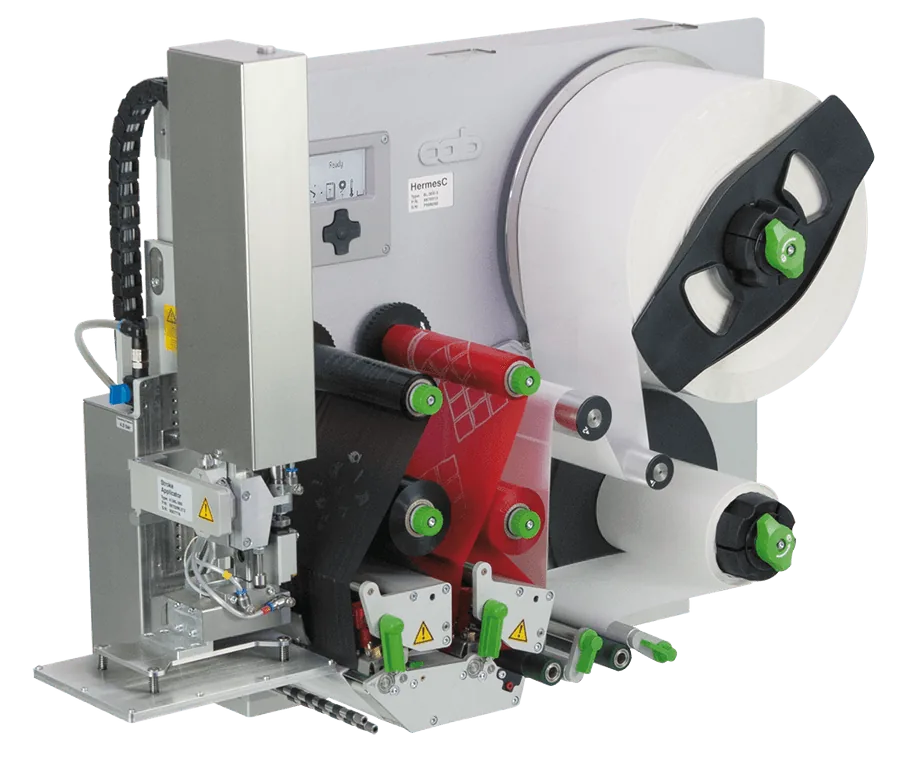
A print & apply unit that rolls the printed label onto cylindrical drums and canisters.
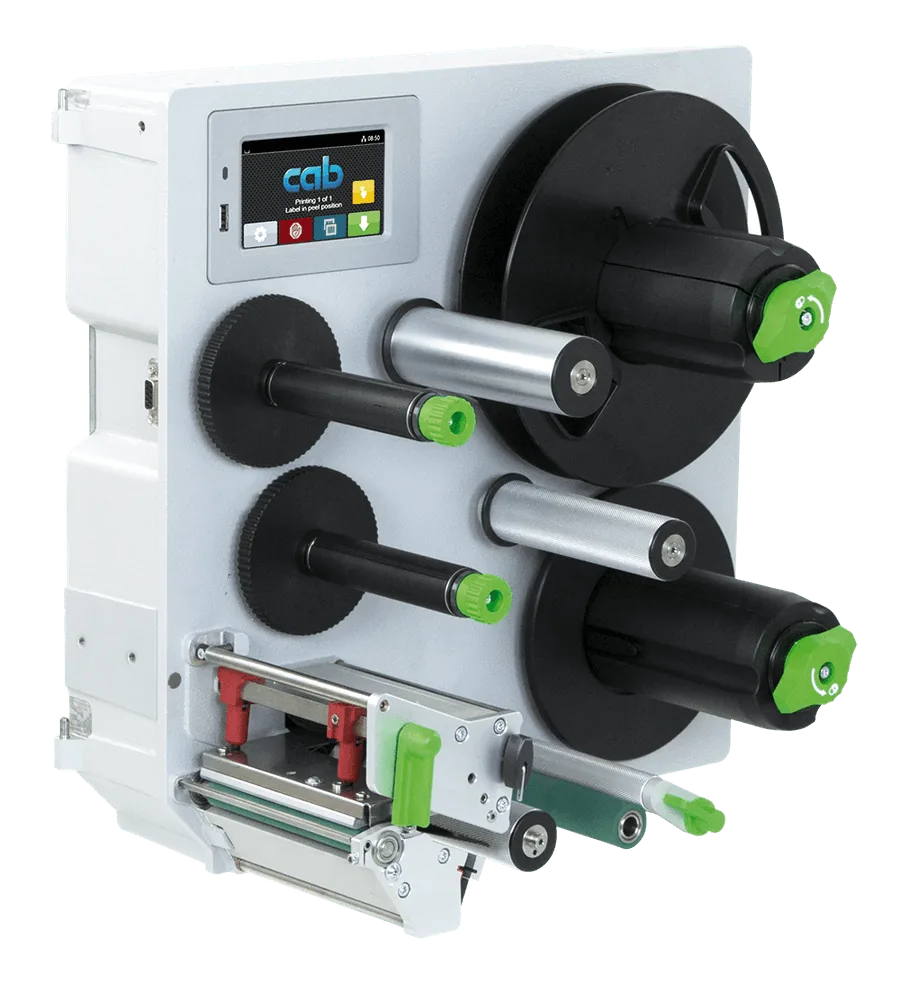
Automatic labeling at the end of the filling line, at the pace of the filler and without an operator stepping in.
Label design software where the GHS elements — pictogram, signal word, hazard and precautionary statements — are put in place and sent straight to the printer.

Solvent- and scuff-resistant print for containers that get washed down after filling or moved by hand.
Related guides
Not finding your own task?
Tell us what needs marking, in what volume and under what conditions — and we will suggest a solution.
Contact us