
Automotive
In automotive manufacturing every fitted part has to be traceable down to the last screw. Serial and batch numbers therefore go straight onto the metal or onto the label, and every station reads them into the system in real time. The hard part is not producing the code — it is keeping it readable years later, under oil, heat and washing.
Marking safety-critical parts on the line
On the gas generators of airbag modules the mark goes onto metal with a laser, across three shifts and several million parts a year. The code is written into the material itself, so it cannot peel off or wash away during assembly and installation. Cycle time is set by the line and the marking station has to keep pace — and a closed enclosure makes that station Class 1, so no separate laser area has to be fenced off around it.
Serial and batch numbers, because of recalls
On transmission and brake components, fuel caps and VIN plates a 2D Data Matrix carries the serial and the batch number. The code is tied to the part’s history: if a defect surfaces later, the affected batch can be identified and only that batch has to be recalled, not the whole production run. The marker is not a standalone machine here — it sits in a robot cell or a PLC-controlled line and receives from there what to write on the next part.
Labels in the engine compartment and on the windshield
Labels that end up in the engine compartment have to hold up next to gasoline and motor oil, and their print must not fade under sustained heat. A windshield label faces a different load: there the main enemy is UV radiation, not heat. In both cases the pairing of face material and ribbon decides the outcome — with the wrong pairing the print is illegible before the vehicle is even handed over.
RFID written into the label as it prints
The UHF RFID transponder is written and read back while the label is being printed, by a module built into the printer. Printed data and chip data are produced in one pass, and a faulty transponder shows up in the printer rather than in the warehouse. The practical payoff appears at receiving: a pallet of parts can be read without line of sight to a single label.
Wire harness assembly and paint masking
Bundling a wire harness calls for tape pieces of repeatable length: a dispenser cuts them to size so the operator does not work with scissors. At the same workplace double-sided tape fixes components in place, and before painting a masking tape protects the surfaces. Each is a small operation, but each repeats many times per harness — which is why dispensing speed and cut-length accuracy matter.
Applicable regulations
In many cases the content and form of the marking is set by law — worth clarifying at the start of the project.
- FDA 21 CFR 1040.10 / IEC 60825-1
- In the US, laser products are classified under the FDA performance standard for laser products, which also accepts classification to IEC 60825-1. A marking station built into a closed, light-tight enclosure is Class 1 from the outside: it can run beside the line without operator eyewear and without a fenced-off laser area.
Recommended machines
Not a complete list, but what suits the most common tasks in this industry.
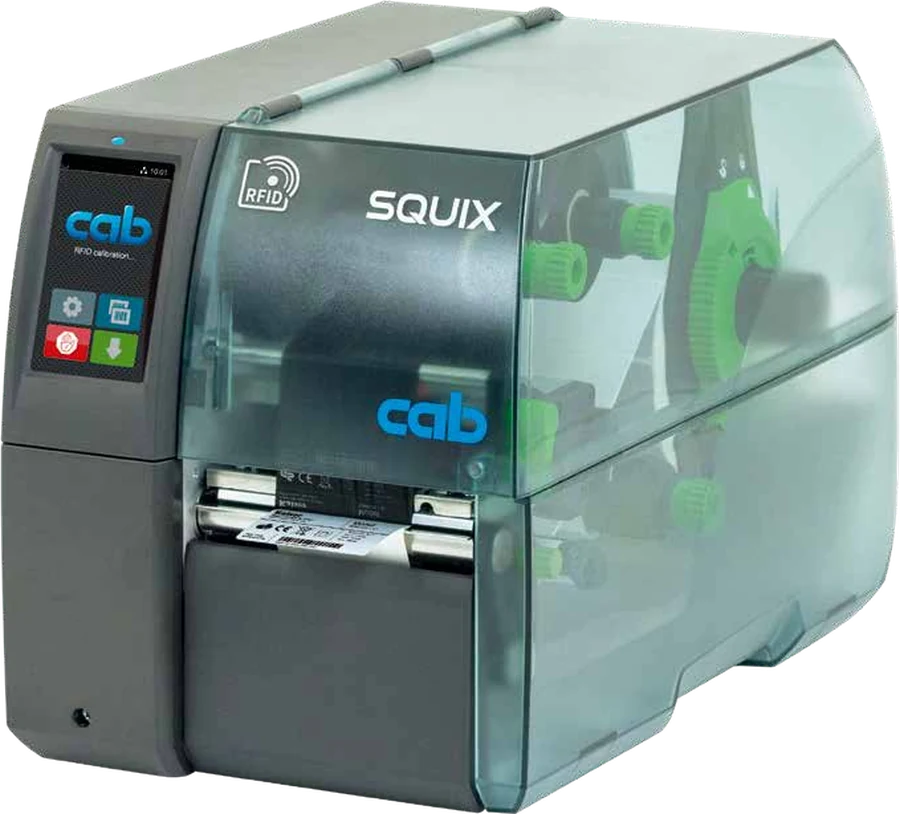
Writes the UHF transponder and prints the label in one pass, so a faulty chip is caught while still in the printer.
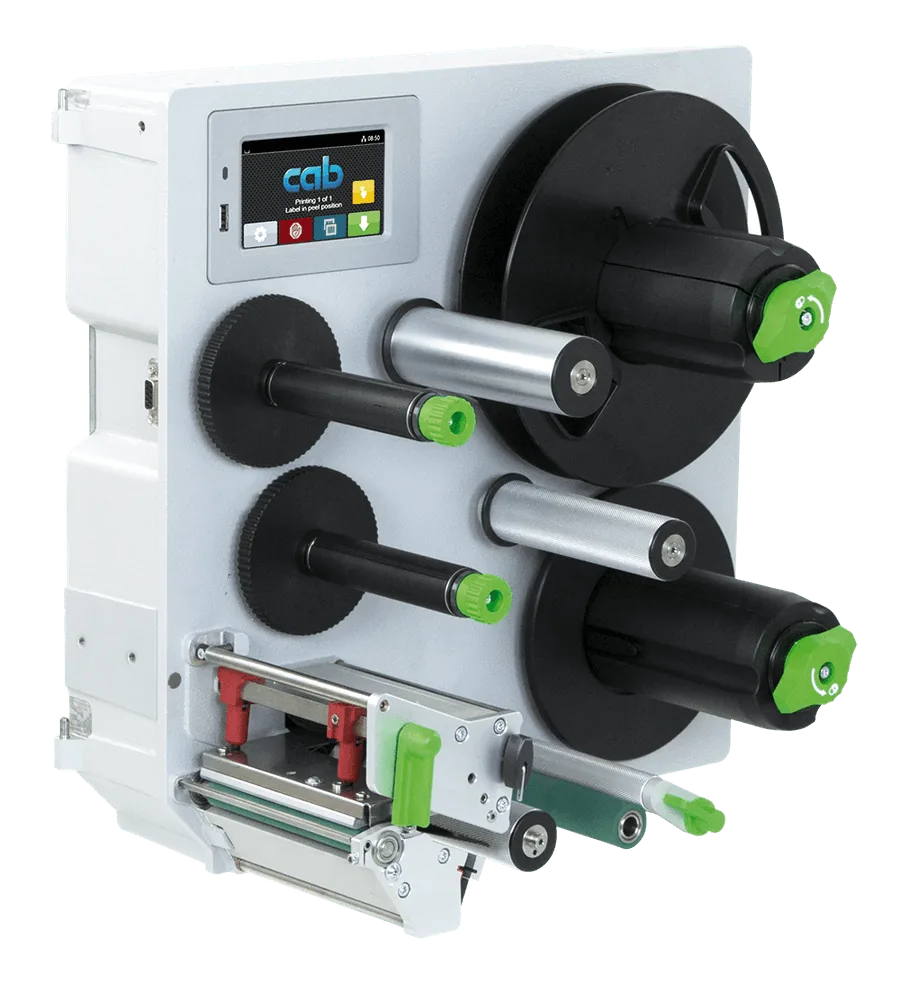
A print & apply unit that puts the shipping label onto the outer packaging at the end of the line, without stopping it.
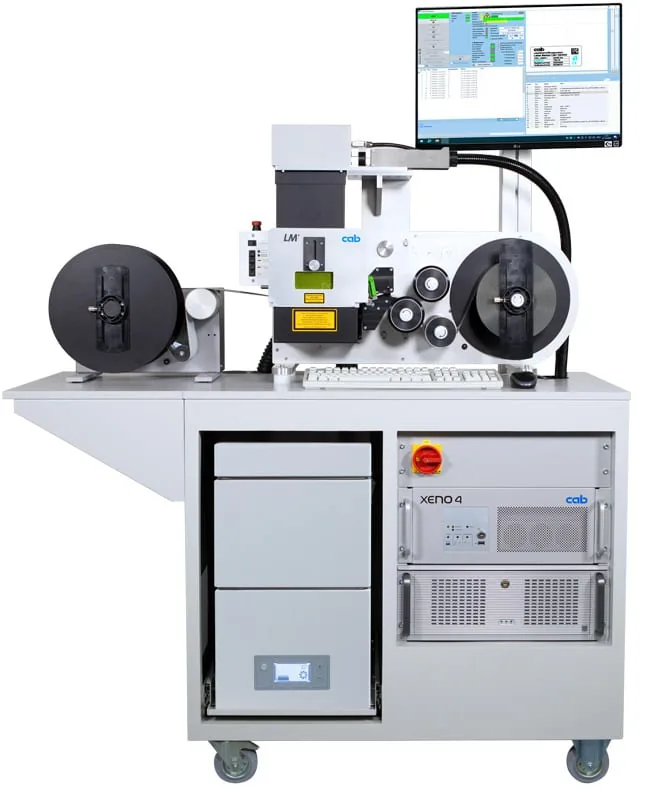
Marks and cuts VIN and data-plate labels in a single pass straight from the roll — with no die, so the plate size can differ from drawing to drawing.
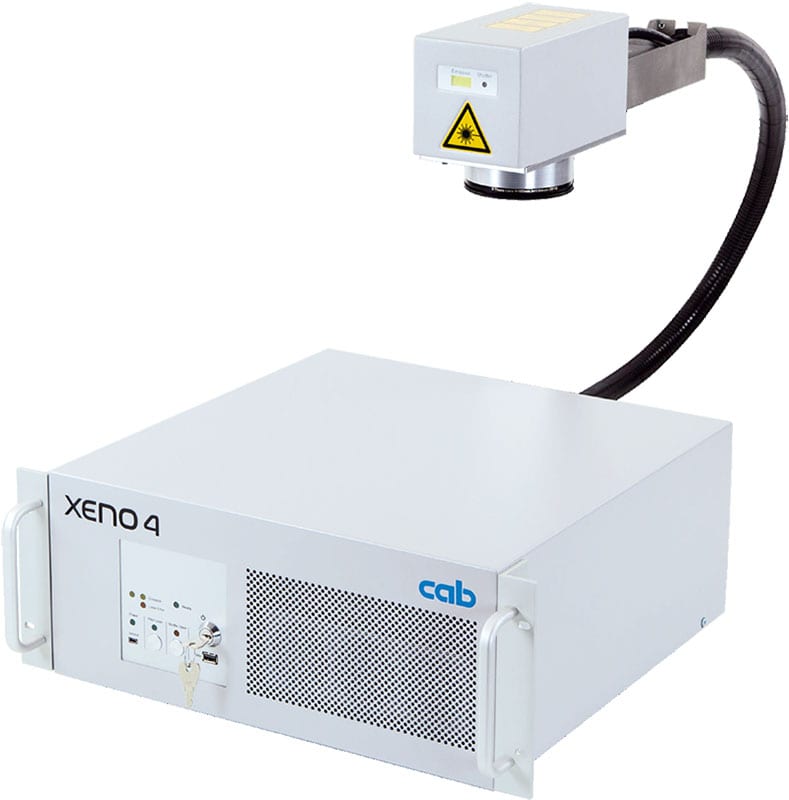
A fiber laser that writes permanent serial and batch numbers into metal parts — the mark lives in the material, not in a layer of ink on top of it.
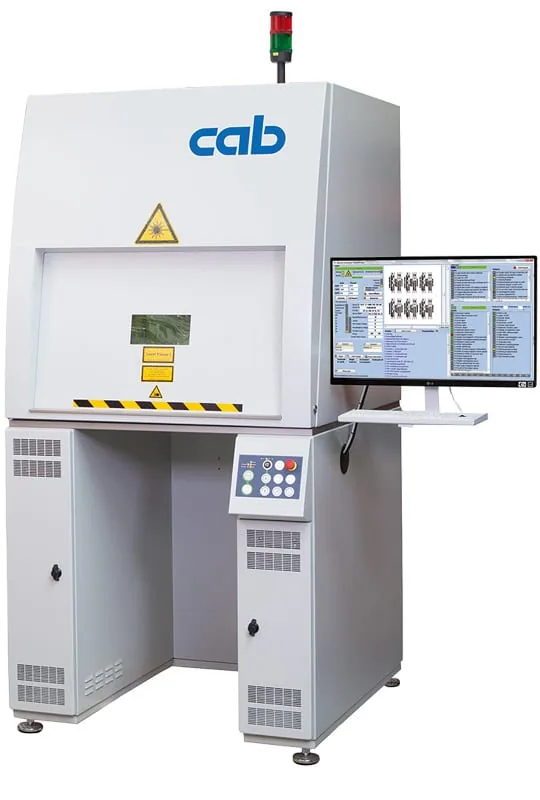
An enclosed marking station for series production: Class 1, so it can stand next to the line without setting up a separate laser area.
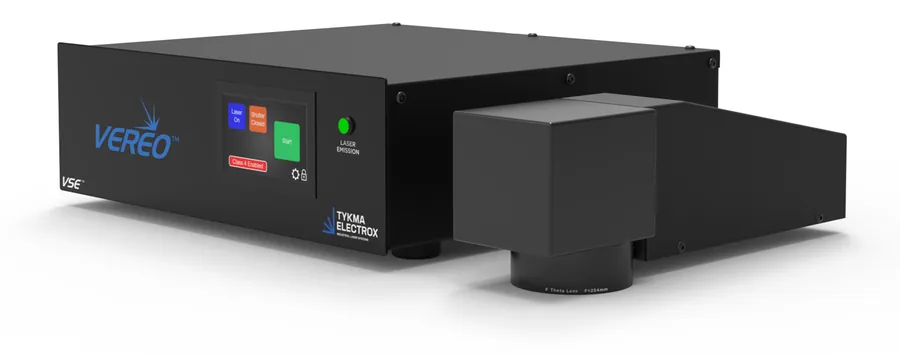
A marking laser built into a production line or a robot cell, taking from the controller what to write on the next part.
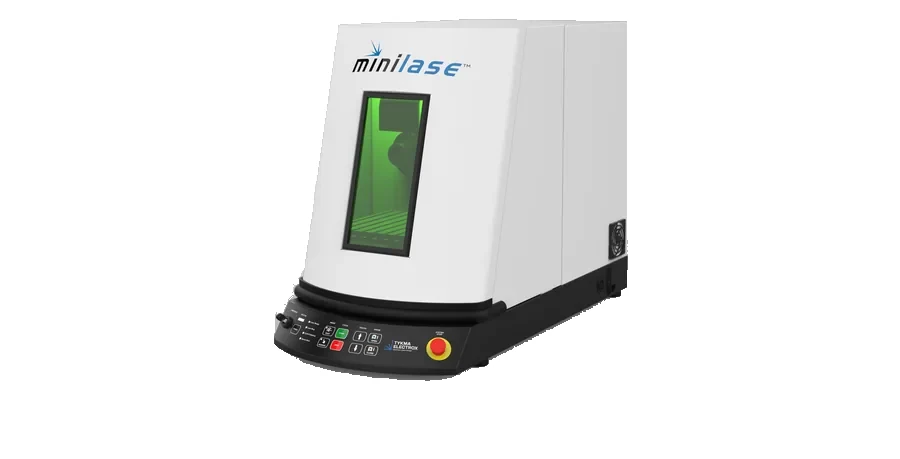
A benchtop Class 1 fiber marker for high volumes — VIN plates and smaller metal parts, with an automated door-close / mark / door-open cycle.
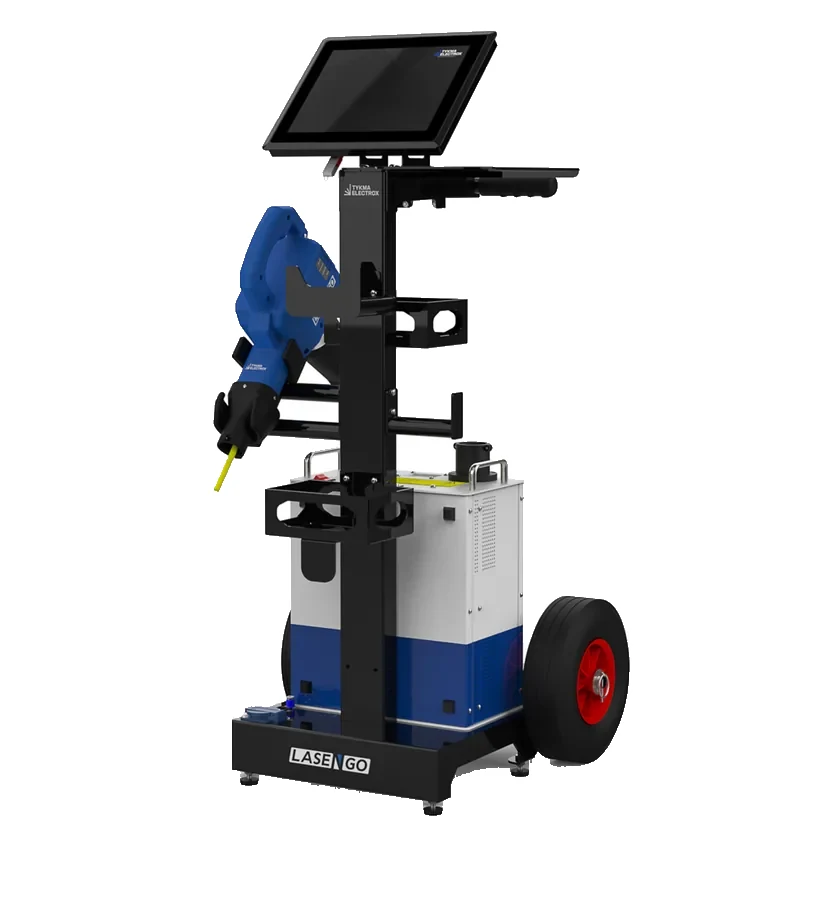
A mobile, handheld Class 1 laser marker on a cart: it marks large parts that are hard to move — pipes, tanks, vehicles — where they stand, without protective goggles or shields.
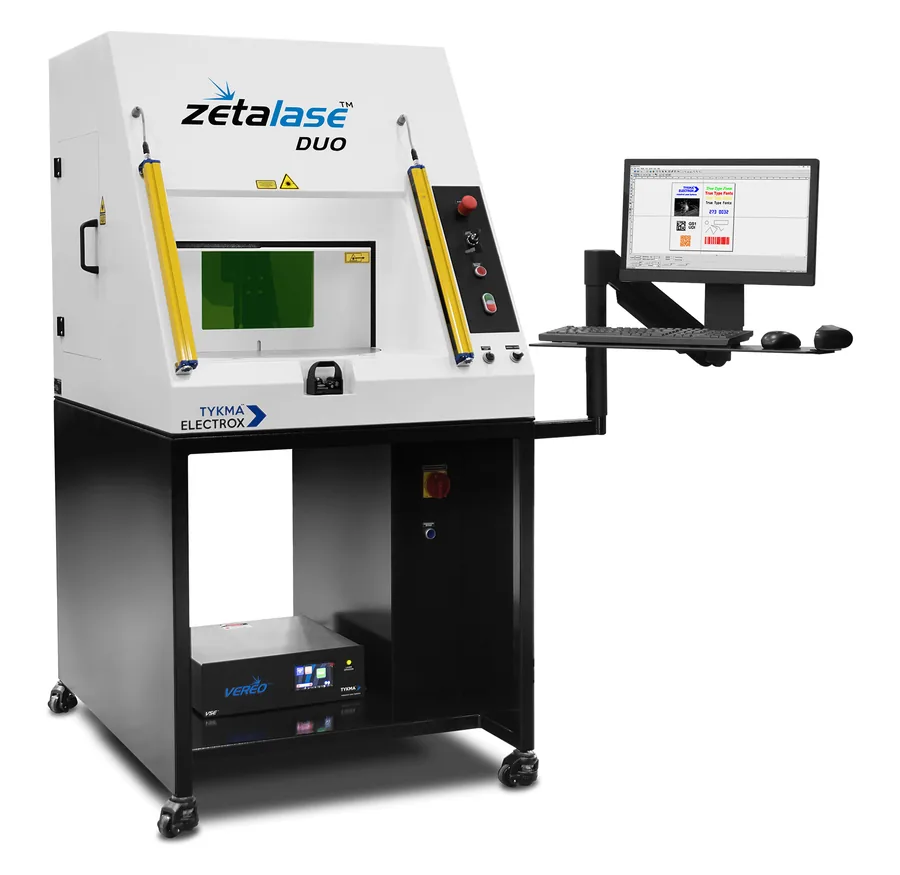
A dial-index, enclosed Class 1 workstation for high volumes: while some parts are being marked, the operator loads and unloads the others, protected by light curtains.
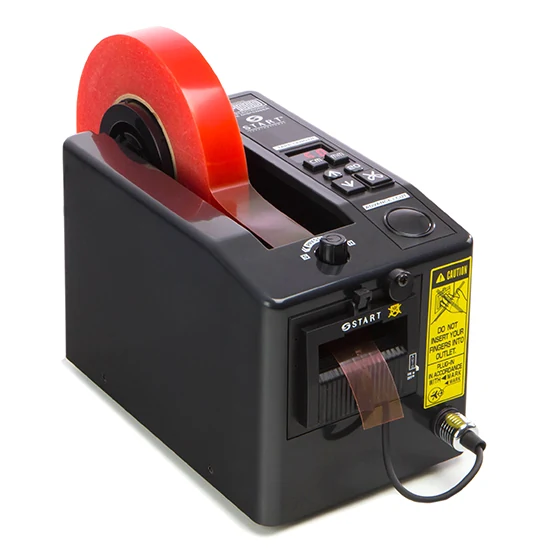
Cuts tape pieces to a repeatable length for harness bundling, so the operator never has to size them with scissors.
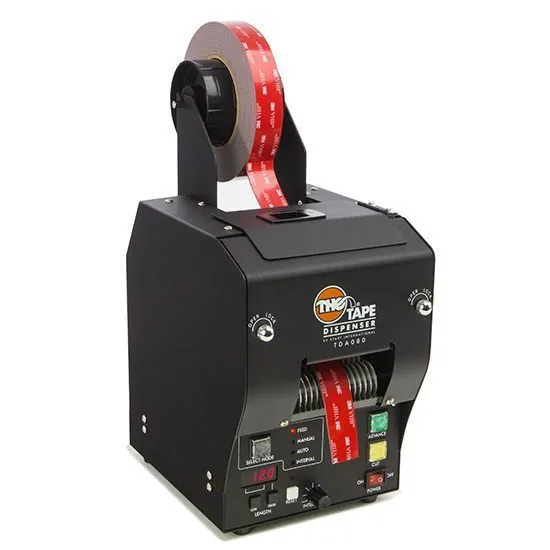
Dispenses high-tack technical tapes at the assembly station — for double-sided fixing and for masking before painting.
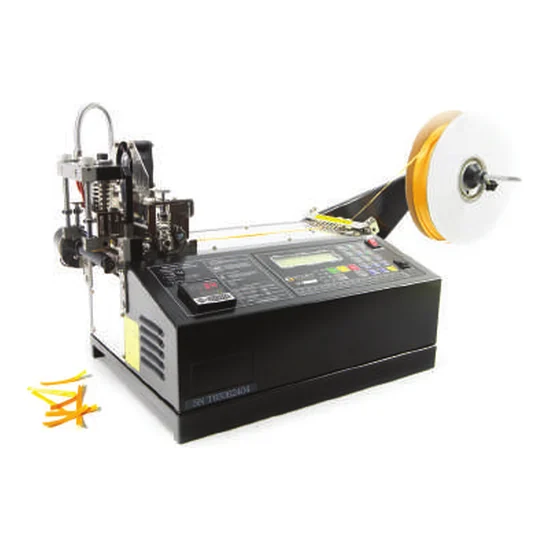
The TBC50LH and the pneumatic TBC50LH/AIR cut seat-belt webbing and other webbing up to 7.87 in (200 mm) wide to a set length, and the hot knife heat-seals the cut end.
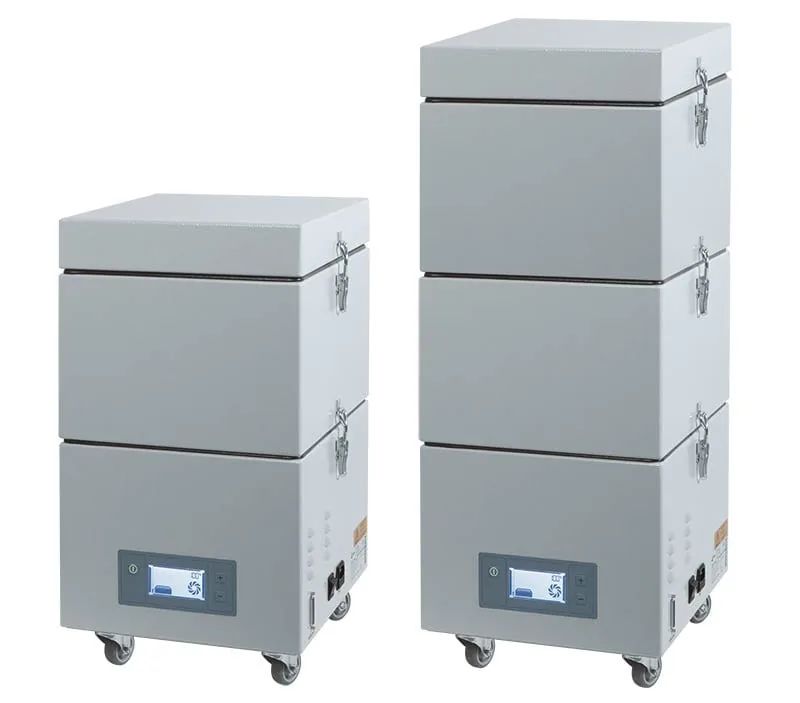
Extracts and filters the fume generated by laser marking, right at the marking point.

Resin ribbon for print that has to cope with oil, heat and abrasion.
Related guides
Not finding your own task?
Tell us what needs marking, in what volume and under what conditions — and we will suggest a solution.
Contact us